Media Centre Contact
All Media Inquiries
For all media enquiries please email the AEMC Media Manager.
Under the National Energy Customer Framework (NECF) a retailer can only provide retail services to small customers under two types of contracts; standard and market retail contracts. Retailers must comply with minimum requirements under each contract to guarantee the provision of energy. In general, the NECF prescribes what these contracts must and must not include. However, it does not provide any general principles for retailers to follow when designing contract terms. In contrast, the Australian Consumer Law (ACL) does not specify specific terms applicable to the sale of goods and services but includes a set of principles that businesses must have in mind when designing and entering into consumer contracts, including energy contracts.
Figure 1.1 below summarises the key consumer protections that both frameworks contain.
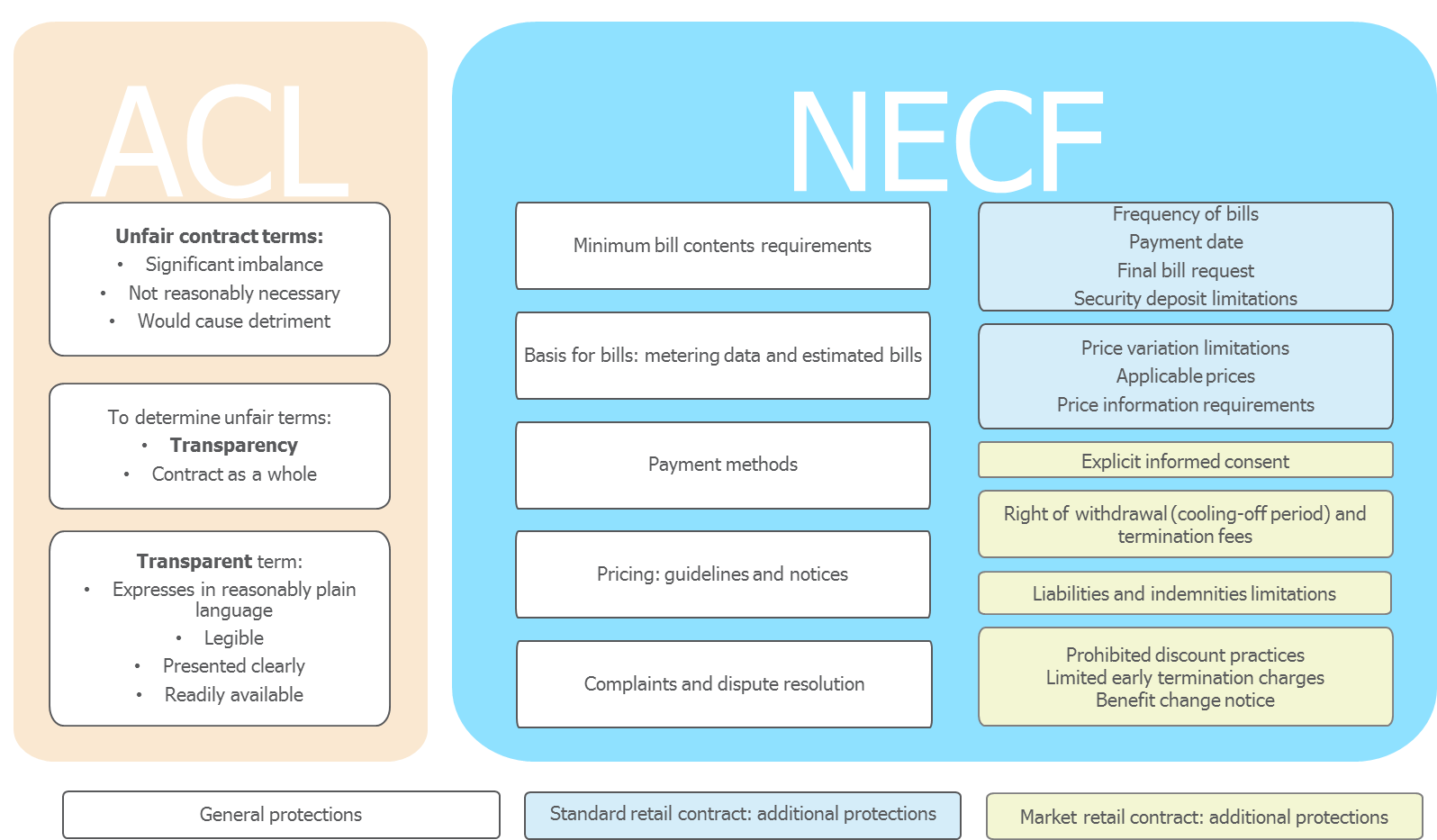
Figure 1.1: Contract terms consumer protections
Source: NERL, NERR, ACL.
The NECF sets minimum requirements for energy contracts (including both standard and market retail contracts) that are related to four main areas (further detail is provided in):
In addition, the NECF contains specific requirements for standard and market retail contracts.
Following the introduction of retail competition, retailers are required to offer at least one standard retail contract at standing offer prices to provide small consumers access electricity from each retailer. The NECF therefore created the standard retail contract that retailers are obligated to offer:
Additionally, the NECF specifies certain circumstances where the standard retail contract is the default contract when the customer does not choose any specific plan, when:
Further to the above, the NECF requires that once a customer has requested the provision of retail services under a standing offer, the retailer cannot decline to enter into a standard retail contract.
Additionally, the NECF prescribes the model terms and conditions of this standard form contract. Any alterations to these contracts must only be those permitted or required under the NERR. Permitted alterations are those related to a retailer's contact details and identity or minor alterations that do not change the substantive effect of the model terms and conditions. Required alterations are those prescribed by the NERR in relation to matters of each jurisdiction or matters otherwise required under the NERR.
The contract requirements prescribed in the NECF to protect consumers under a standard retail contract include:
The requirements for a market retail contract are less prescriptive than the standard retail contract under the NECF. There are no model terms and conditions for market retail contracts under the NECF, with most terms being as agreed between the retailer and the small customer. However, this contract must be consistent with the applicable minimum requirements under the NERR, any variation must be consistent with the NERR variation requirements and in case of any inconsistency, the NERR will prevail.
The minimum requirements are related to the following areas:
A distributor must provide customer connection services if a customer requests those services and their premises are connected, or they are seeking to have those premises connected to the distribution system. These customer connection services must be provided in accordance with the relevant contract requirements prescribed under the NERL, NERR, National Electricity Rules (NER) and National Gas Rules.
For small customers, distributors must, as soon as practicable after the retailer notifies the distributor of the formation of a retail contract, provide customer connection services under the model terms and conditions of a deemed standard connection contract. This provision assists consumer in being supplied with energy connection services from distributors once a retail contract is formed.
The NECF sets out minimum requirements for each customer connection contract, as follows:
In contrast, the ACL does not prescribe what consumer contracts must and must not include. In general, it is a principles-based approach to promote competition and fair trading, and for providing consumer protection. The ACL includes legal requirements, penalties and remedies relevant to businesses and individuals that deal ‘in trade or commerce’. This means that it essentially covers everybody, whether it is a consumer buying products or services, or whether it is a business that sells products or services to individuals or other businesses.
In particular, the ACL has restrictions regarding unfair contract terms. The ACL's unfair contract term provisions apply to consumer contracts for the supply of goods or services for personal, domestic or household use or consumption. For the purposes of the ACL, electricity and gas are 'goods'. Energy contracts are therefore covered by the ACL and the unfair contract term provisions are applicable to retail energy contracts.
The ACL defines what an unfair contract term is and what a court may take into account when determining whether a contract term is unfair. There are three limbs that are part of the unfairness test under the ACL and all must be proven to exist for a court to decide that a term is unfair:
When a court is determining if a contract term is unfair, the term must be considered in the context of the contract as a whole and it may take into account the extent to which the term is transparent. For example, terms that may not be considered transparent are those hidden in fine print or schedules, phrased in legalese or in complex or technical language or are ambiguous or contradictory. This transparency provision is an example of the principle-based regulation under the ACL that is applicable to consumer contracts including energy retail contracts.
There are some contract terms where the ACL unfair contract term provisions do not apply. For example, the ACL unfair contract term provisions do not apply to a term that defines the main subject matter of the contract (the good or service of a consumer contract) or a term that sets the upfront price payable under the contract. This is mainly because a consumer had the choice whether to make the purchase on the basis of what was offered, and with the price that was disclosed before the contract was formed.
The definition of 'upfront price' in the ACL is key to understanding which terms are covered by the unfair contract term provisions. The upfront price includes any payments to be provided for the supply, sale or grant under the contract that are disclosed at or before the time the contract is entered into. If the term that sets the price under the contract includes any other consideration that is contingent on the occurrence or non-occurrence of a particular event, it is not an upfront price as defined under the ACL. For example, terms that impose fees and charges levied as a consequence of something happening or not happening at some point over the period of the contract are not upfront prices and therefore, are covered by the ACL's unfair contract term provisions.
When considering if a future payment is an upfront price or not, the court may take into account whether these payments were transparently disclosed to the consumer. A court may also consider whether the consumer was made aware of the basis on which such payments would be determined, at or before the time the contract was made.
For energy, standing and market retail contract prices are a retailer's standing and market offer prices. The application of the ACL's unfair contract terms provisions to the price terms of an energy retail contract will depend on how these terms are structured. If the retail contract term related to payment is not disclosed at or before the time the contract is formed, or includes any other payment that is contingent on the occurrence or non-occurrence of a particular event, it would not be an upfront price and therefore, the ACL's unfair contract term provisions would apply.
In the energy retail market, price competition using conditional discounts is a very common pricing practice. This practice has led to concerns raised in the Australian Competition and Consumer Commission's Retail Electricity Pricing Inquiry, the Thwaites Review and the AEMC's 2017, 2018 and 2019 retail energy competition reviews. There is a view that this form of pricing practice has led to consumer confusion, makes offers by retailers harder to compare and results in lower levels of engagement in the energy sector. For example, if the terms in consumer contracts that set conditional discounts are not upfront prices (as defined under the ACL) then these terms will be covered under the ACL's unfair contract term provisions. Reviewing this retail practice under ACL's could improve retail competition practices and deliver better outcomes for consumers.
Media Centre Contact
For all media enquiries please email the AEMC Media Manager.
Subscribe
Register to receive AEMC news updates and announcements by email.
Follow Us
Follow the AEMC on LinkedIn for the latest news, events and publications.
Calendar